
THE TRUSTED Operating System for Modern Families
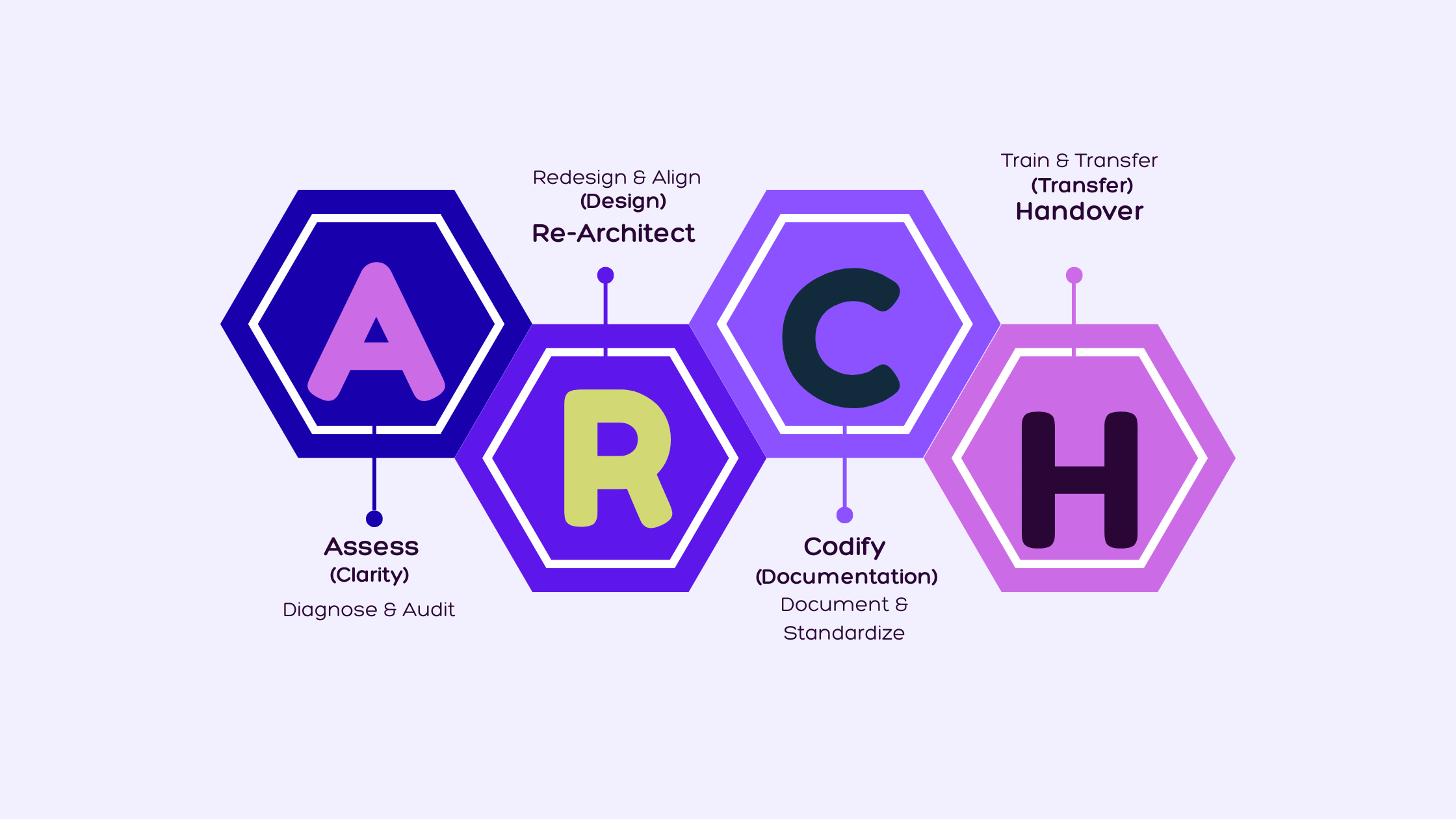
The A.R.C.H™ Methodology
provides a tested structured approach to building homes that are stable, adaptable, and legacy-focused.
Does your current family structure support the life you intend to build?
The A.R.C.H™ Methodology is suited for homes with
Mental Load Concentration
One person carries the invisible planning, remembering, coordinating, and correcting — and it is becoming exhausting.
Person-Dependent Systems
If one adult or key staff member is unavailable, the entire home operation slows down or collapses.
Undefined Standards
You have expectations about cleanliness, parenting, discipline, spending, and routines, but they are not clearly articulated or aligned.
Inefficient Domestic Staffing
You hired help to reduce stress, but without proper structure, managing them has become another layer of stress.
Transition Fragility
Relocation, new babies, promotions, travel, or staff exits destabilize your home more than they should.
Knowledge Non-Transfer
Your children are comfortable, but you are unsure if they are developing competence, responsibility, and operational awareness in areas you think is necessary.
Incoherent Family Vision
You are busy building careers, but we have not formally defined the kind of family we are building or the legacy you intend to leave.
Lack of Financial Structure
You earn well, but your financial systems lack clarity, documentation, and long-term intentional design.
Role Ambiguity
You are both capable adults, yet you constantly argue about who should be doing what. Responsibilities are assumed, not defined.
A.R.C.H™ is not about doing more. It is about designing better.
01
ASSESS structural gaps
We Diagnose Before We Design. Before growth, there must be clarity.
Just like a well-run organization begins with an operational audit, we begin by evaluating how your home is currently functioning.
• Conduct a Family Operations Audit
• Map responsibilities
• Identify bottlenecks
• Distinguish between emotional tension and structural failure
• Assess risk exposure.
You will gain a clear, objective view of:
Where friction is repeating
Where decision-making is unclear
Where one person carries disproportionate cognitive load
What would break under pressure
Before growth, there must be clarity.

02
RE-ARCHITECT intentional systems
We Redesign the System.
This phase mirrors strategic organizational restructuring.
We do not add more effort we redesign flow.
What we do:
• Redefine roles using responsibility mapping frameworks
• Redesign weekly rhythms using workflow optimization principles
• Introduce capacity-based planning
• Eliminate inefficiencies using lean thinking principles
• Build contingency frameworks for transitions (relocation, staff changes, new babies, promotions)
Outcome:
Your home operates on defined systems, not memory.
Ownership becomes clear.
Predictability increases.
Mental load decreases.

03
CODIFY clarity into documentation
Transfer of knowledge into documented processes.
What we do:
• Develop written role charters for adults and domestic staff
• Create Standard Operating Procedures (SOPs) for key household processes
• Establish decision-making hierarchies
• Document transition playbooks
We convert invisible labor into visible structure.
Outcome:
Stability no longer depends on one person remembering everything.
Continuity is protected.
Replacement risk is reduced.
Your home becomes operationally resilient.

04
HAND OVER knowledge, stability and legacy
Transference of competence
What we do:
• Introduce progressive responsibility systems for children
• Design skill-transfer frameworks (financial literacy, life management, operational awareness)
• Train domestic staff within documented standards
• Build succession thinking into your family design
• Establish feedback and review cycles
We embed competence into daily life.
Outcome:
Your children inherit systems, not confusion.
Your staff operate within clarity.
Your family remains stable through seasons of change.
Our Guarantee
A structurally sound family operating system designed with the same intelligence you apply at work.
Integrate the A.R.C.H™ into your home
Self-Directed
We'll provide the architecture. You'll execute it.
This model is designed for professionals who are disciplined, self-motivated, and capable of implementation but need a framework.
Through guided lessons and practical templates, you will learn how to:
• Identify recurring operational friction within your household
• Redesign routines and responsibilities around your current season of life
• Document expectations so daily life becomes easier to manage
• Reduce the mental load carried by one individual
• Create systems that allow your household to function more predictably
Includes
• A.R.C.H™ Framework Training
• Household System Design Templates
• Family Role & Responsibility Guides
• Operational Documentation Tools
• Implementation Workbook
Advisory & Custom Service
For High-Capacity, High-Responsibility Families
We'll diagnose. We'll design. We'll oversee implementation.
This option provides direct support in redesigning your household systems using the A.R.C.H.™ methodology.
Together we will:
• Analyze the results of your Family Architecture Assessment™ (Domain level Diagnostics and Dependency index)
• Identify structural gaps affecting daily operations
• Design systems tailored to your household structure
• Clarify roles, routines, and expectations
• Build documentation that stabilizes household management
Begin Building the Structure Your Family Needs
If you are working very hard to keep life running, what is often lacking is not effort but structure.
The A.R.C.H™ Methodology exists to help you move from constant management to intentional design.
When a home operates with clarity and shared systems, daily life becomes lighter, more predictable, and more sustainable for everyone involved.
Whether you begin independently or with guidance, the most important step is moving from reacting to problems toward designing solutions.
